
HISTORY
Or: The History of Professional Insect Light Traps
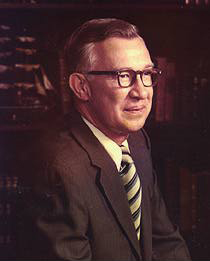 Pioneer of the ILT Industry Don Gilbert (1923 - 1993) |
In the early '50s, my father saw his first insect electrocuting light trap. It was a rudimentary outdoor design using two 15 watt blacklight lamps. He called the manufacturer to order one and found that, if he ordered two, he would be a "distributor". He bought two and put them up on poles in his yard at home.
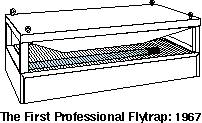
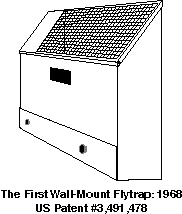
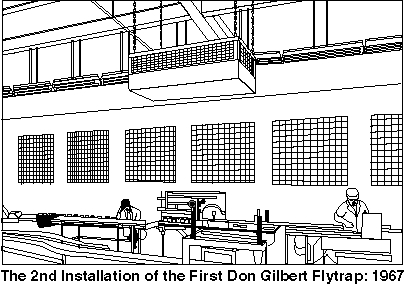
In the 1950's and early 60's (while building some of the first pre-fabricated homes and spray car washes), he sold a few of those old outdoor traps to road side restaurants, vacation resorts, and even solved a paper mill's June Bug problem with them. There were "V" shaped catch-trays that would attach to the old outdoor traps, but far too many insects missed those trays. After reading Rachael Carson's "Silent Spring", he realized there would be a real need for light traps inside buildings such as food plants and pharmaceutical laboratories. After unsuccessfully attempting to convince his manufacturer to design a new trap, he set out to make his own. In 1967, Gilbert designed the first enclosed "escape-resistant" insect light trap. It was also the first light trap to obtain a U.L. listing. The following year, he came out with the first wall-mount light trap, which made it possible to place a trap down low where the fly is most active and responsive. In 1972, he patented the first glueboard light trap. |
|
|
 Various new designs were implemented over the years, but the secret to his success in pioneering the industrial use of light traps was due at least as much to his philosophy of proper use as to his trap designs. "Light traps are not magic," he often said. "They're an integrated pest management tool which must be used in conjunction with good sanitation, employee education, and the necessary chemical and physical methods of control."
 |
With an engineering background, he set out to pioneer a new industry. Early on, he searched out scientists doing research in the field. Though they were almost exclusively concerned with agricultural uses for light traps, he could not have succeeded without their help. He learned what he could from them, raised his own flies and did his own research with various lamps and trap designs. Regrettably, he kept no written records. He was "flying (excuse the pun) by the seat of his pants". He was, in fact, literally flying his private plane from one industry to the next, planting ILTs like apple seeds, where ever he went. He maintained that what he learned from firsthand experience, flying his plane from food plant to pharmaceutical laboratory to hospital to supermarket, placing his traps in the area each industry considered most critical or insect-free and seeing what showed up in the trap was of greater value than laboratory tests. Food and drug production areas were his laboratories. There was (and still is) no better way to demonstrate professional ILT effectiveness than to plug them in on site. |
|
I am always interested in sharing experiences with anyone considering earnest research. With your help, each update of this website will promote a deeper understanding, and wiser use of our products. Call me at (800) 643-0400 or (870) 932-6070. David Gilbert |
 |
 Made in the USA of US and imported parts.
Buy Our Traps, Create US Jobs!
Gilbert Industries, Inc. 5611 Krueger Drive, Jonesboro, AR 72401
TOLL FREE: (800) 643-0400 PHONE: (870) 932-6070 FAX: (870) 932-5609
E-MAIL: mailbox@gilbertinc.com
Site Created: August 1996 Copyright© 1996-Today, Gilbert Industries, Inc.